Micro Influencer Marketing: Drive Authentic Engagement with Loyal Audiences
Learn how micro influencer marketing drives authentic engagement and measurable ROI through creators with 10K-100K followers. Discover proven strategies for finding, vetting, and partnering with niche influencers who build loyal audiences and deliver superior conversion rates compared to traditional advertising.
Micro influencer marketing has emerged as one of the most cost-effective strategies for brands seeking authentic engagement and measurable ROI. While celebrity endorsements dominate headlines, the real power lies with creators who have 10,000 to 100,000 followers; whose audiences are small enough to foster genuine relationships yet large enough to drive significant business impact.
Micro influencers generate engagement rates up to 60% higher than macro influencers. For eCommerce brands building community-driven growth strategies, these partnerships offer a scalable path to reaching niche audiences who trust recommendations from relatable voices.
What Are Micro Influencers?
Micro influencers are content creators with follower counts typically ranging from 10,000 to 100,000 across platforms like Instagram, TikTok, and YouTube. Unlike celebrity influencers or macro creators with millions of followers, micro influencers operate within specific niches where they’ve cultivated highly engaged communities.
The defining characteristic isn’t just follower count, it’s the relationship between creator and audience. Micro influencers maintain active conversations with their followers, respond to comments regularly, and produce content that reflects authentic experiences rather than polished brand messaging.
The Micro-Influencer Spectrum
Nano-influencers (1k-10k followers) technically a separate category, they operate at the smallest scale but often achieve the highest engagement rates. The problem is their reach overall is too small to drive significant results.
Core micro-influencers (10k-50k followers) are the sweet spot for most brands. They’ve built substantial authority within their niche while maintaining authenticity.
Upper-tier micro-influencers (50k-100k followers) offer greater reach while still delivering engagement rates that outperform larger accounts.
Why Micro-Influencers Drive Superior Engagement
First of all, micro-influencers build followings around specific interests. Instead of just "fitness," it’s postpartum recovery or vegan bodybuilding. This specificity means audiences share clearly defined characteristics and purchasing behaviors, delivering more qualified prospects than broad campaigns.
Then, generally speaking, as follower count increases, engagement decreases. Micro-influencers maintain 3-7% engagement rates compared to under 2% for accounts over 1 million.
Their smaller audiences also foster genuine community, with followers viewing posts as personal recommendations from trusted voices rather than celebrity endorsements. Consumers detect sponsored content easily. Micro influencers excel at natural product integration, demonstrating real usage and maintaining genuine voices that drive higher conversion rates.
Finally, while macro-influencers charge $10,000-$100,000+ per post, micro-influencers typically charge $100-$1000, or better, they work on product exchanges. Brands can partner with 20-50 micro influencers for the cost of one macro partnership, multiplying touchpoints and reaching diverse segments simultaneously.
How Micro Influencer Marketing Builds Brand Loyalty
Micro influencer partnerships create long-term value beyond immediate metrics. When trusted creators recommend your product, their credibility transfers to your brand through personal endorsement rather than traditional advertising.
Repeated exposure builds familiarity that converts browsers into loyal customers. Effective campaigns integrate your brand into existing communities, and when multiple niche creators showcase your products, your brand becomes associated with that community's values and identity.
This creates belonging, not just awareness. Partnerships also generate amplification as followers create their own content featuring your products, seeding dozens of additional touchpoints through organic participation.
Finding the Right Micro-Influencers for Your Brand
Identifying aligned micro influencers requires strategic research across multiple methods. Start with your existing community, your best partners may already follow your brand or purchase your products.
Review your Instagram and TikTok followers for accounts with 10,000-100,000 followers creating relevant content. Check who tags your brand organically, as these creators demonstrate genuine interest.
Platforms like Refunnel automate social listening to capture every mention across Instagram and TikTok, identifying creators manual searches miss. Recently, we’ve also released a Creator Search tool that can help make this process easier for those who are scaling their micro influencer marketing campaigns.
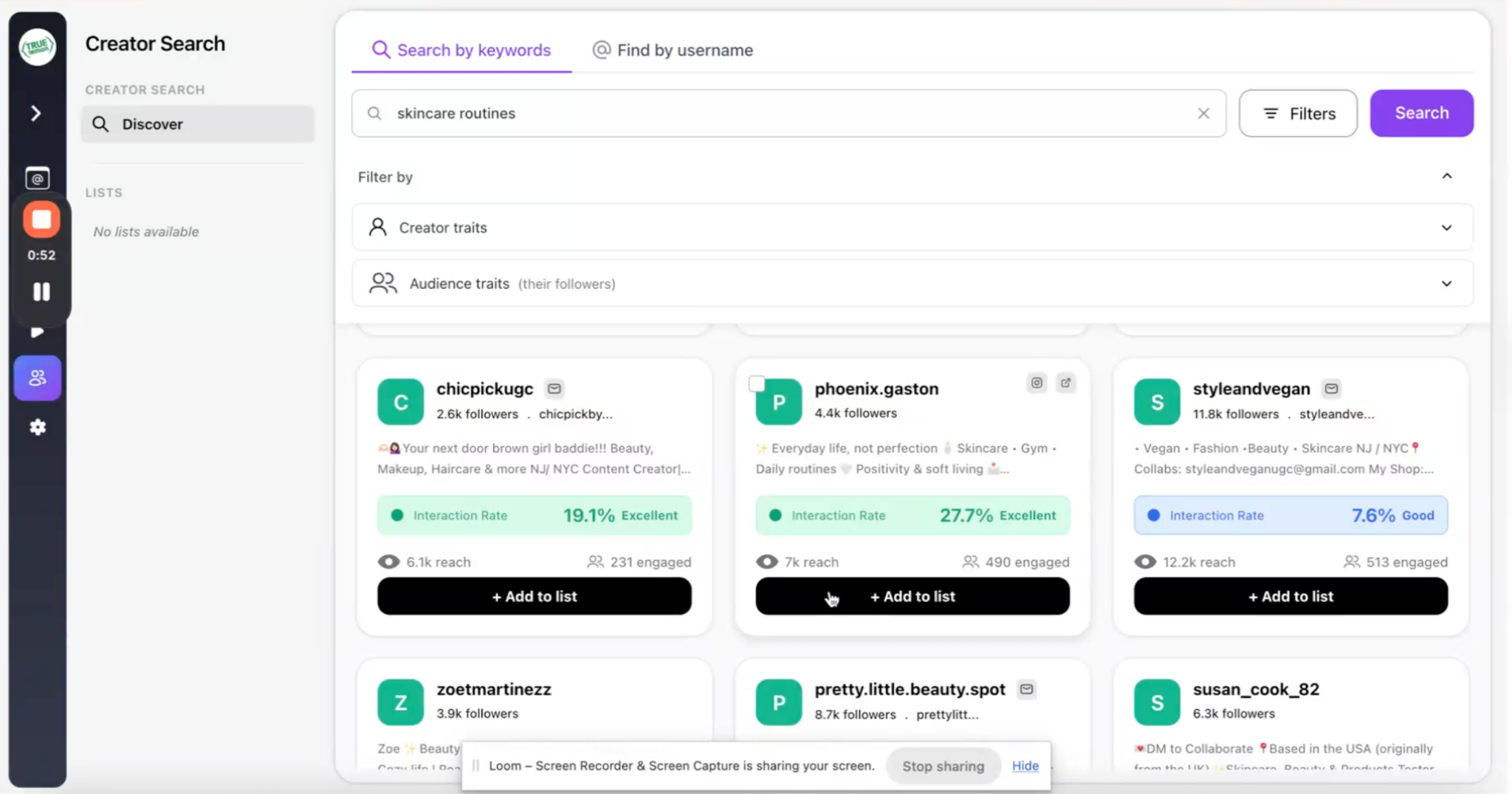
Analyze competitor partnerships to reveal active creators who understand your audience. Review their social tags, sponsored disclosures, and brand mentions to identify creators generating strong engagement in your category.
Vetting Micro Influencers: What to Look For
Finding potential partners is only the first step. Thorough vetting ensures you invest resources in creators who deliver results.
You should start by evaluating their audience quality. Engagement rate matters more than follower count here. Calculate engagement by dividing total interactions (likes + comments + shares + saves) by follower count, then multiplying by 100.
For micro influencers, target engagement rates above 3%. Rates below 2% suggest inactive followers or poor content-audience fit.
Some Red flags to watch for include sudden follower spikes, generic comments, high follower count with minimal engagement on recent posts, and most importantly, audience demographics that don’t match your target market.
Content Quality and Brand Alignment
Review at least 20 of their recent posts to assess their aesthetic and production quality, the content’s authenticity and originality, how naturally they integrate sponsored content and whether their values align with your brand identity. You should also keep an eye out for consistency in all these aspects, along with their posting frequency.
Micro influencers don’t need professional photography or video production. What matters is authentic voice, clear communication, and content that resonates with their audience.
Audience Demographics Verification
Once you’ve taken an initial look at their profile and have deemed them a match, request their actual audience insights. This should show:
- Age and gender distribution
- Geographic location breakdown
- Top interests and behaviors
- Language preferences
Most platforms provide creator analytics that partners can share. This data confirms whether the creator’s audience matches your target customers. If it does then you’re good to go to the next step.
Past Partnership Performance
Ideally, you’re working with people who’ve done this before. You can totally reach out to people who’ve never done it, as you might get a deal, but you’ll also be dealing with them learning the ropes of sponsored content and relationship management at this level.
If you’re working with people with experience, figure out which brands they’ve worked with, what results those campaigns achieved, how they typically structure partnerships and whether they can share performance data.
Creators who deliver results gladly share metrics from successful campaigns. Hesitation to discuss past performance may indicate disappointing results.
Authenticity Assessment
Spend time reviewing how creators interact with their audience. Read comments on multiple posts. Check whether the creator responds and how those conversations develop.
Authentic micro influencers maintain real relationships. They’ll remember followers, reference previous conversations, and engage beyond surface-level responses.
Structuring Effective Micro Influencer Partnerships
How you structure partnerships determines both creator enthusiasm and campaign performance. And while similar to brand deals in UGC, there are a few key differences to look out for.
Partnership Models
Product Seeding sends free products without contractual obligations, cultivating organic content from genuinely interested creators. Not every recipient posts, but those who do provide authentic endorsements that perform exceptionally well. About a third of recipients create content organically, making this ideal for building long-term relationships.
Fixed-Fee Agreements pay set rates for specific deliverables. Whether that’s posts, stories, or videos over defined periods. This provides predictable costs and guaranteed output.
Typical micro influencer rates range from $100-$500 per Instagram post, $150-$600 for TikTok videos, and $200-$800 for YouTube integrations.
Commission-Based Partnerships compensate creators based on sales generated through unique discount codes or affiliate links. The TikTok Shop Affiliate Program exemplifies this approach.
Finally, Hybrid Arrangements combine fixed fees with performance bonuses or commission structures, providing guaranteed compensation while incentivizing conversion optimization. Many successful programs offer base fees plus commission tiers that increase with sales volume.
Setting Clear Expectations
You should always document partnership terms in writing. Specify content requirements including number and type of posts, posting timelines, required hashtags and handles, and product features to highlight. Provide brand guidelines covering messaging dos and don'ts, visual style preferences, accurate product representation, and any regulatory compliance requirements for your industry.
Address usage rights upfront. Clarify whether you can repurpose content in paid advertising or on websites. Securing usage rights prevents legal complications and enables amplification of top-performing content across channels.
Finally, ensure creators understand disclosure requirements. In some places, posts must include #ad or #sponsored prominently, not buried in hashtag lists.
Negotiating Fair Compensation
Several factors influence appropriate compensation. Engagement rate matters most, a creator with 20,000 highly engaged followers delivers more value than one with 80,000 passive followers.
Content complexity can also affect pricing; simple product photos require less work than styled shoots or edited videos. Usage rights significantly impact rates, with organic social posting commanding lower fees than content repurposed in paid advertising, and usage rights adding 25-50% to base rates. Exclusivity preventing competitors' partnerships also justifies premium compensation.
While not set in stone, a good rule of thumb to keep includes:
- Organic Instagram posts go for $100-$300.
- Instagram Reels or TikTok videos for $150-$500
- Multi-post campaigns can range anywhere between $400-$1,500.
And to all of this, add 25-50% for paid media usage rights. These ranges vary by niche, audience quality, and creator experience. High-performing creators with proven conversion records command premium rates.
Executing Successful Micro Influencer Campaigns
There are many aspects going into a successful micro influencer campaign. And it all starts with the brief.
You should provide creators with comprehensive creative briefs that guide without constraining creativity. State clear campaign objectives (awareness, engagement, traffic, or sales), share detailed product information, and allow creative freedom. Micro influencers know their audience better than you do; so provide direction on key messages while allowing flexibility in execution.
Keep realistic timelines that account for product shipping (5-10 days), creator testing (1-2 weeks), content creation (3-7 days), and posting schedules. Expect 3-4 weeks from shipment to publication for product seeding campaigns.
Coordinate initial posts within 24-48 hours to create momentum, then schedule follow-up content over 2-4 weeks. And encourage creators to engage with each other’s content for cross-pollination.
And as an extra tip, when you’re first starting out, you should be approving all of your content. But as you grow, successful programs skip pre-approval for trusted creators, instead providing clear guidelines upfront. Reserve the approval for highly regulated industries, major launches, or first-time partnerships.
Measuring Micro Influencer Campaign Success
The right way to do this is divided in four parts: Engagement, Reach, Conversion and Long-term Value (LTV) metrics.
When looking at engagement, the most important to calculate is the engagement rate. You can get these numbers yourself through the following formula when you’re starting out: (likes + comments + shares + saves) ÷ reach × 100 for each creator’s content and keep track of it on a spreadsheet.
Review comments for sentiment and genuine interest indicators beyond generic reactions. High-value engagement includes saved posts, shares to friends, and detailed product questions.
Reach and awareness can be tracked by impressions, unique reach, and brand mention increases during campaigns. And you should use UTM parameters in creator links to attribute traffic accurately.
Conversion metrics monitor click-through rates, conversion rates from creator traffic, and revenue attribution through unique discount codes or affiliate links. Calculate customer acquisition cost (total spend ÷ new customers) and compare to other channels.
Track content LTV and lifespan (how long posts continue driving engagement or sales), repurposing ROI from using creator content across channels, and creator relationship value as performance improves across multiple campaigns.
As you grow, and keeping track of all the content becomes more difficult, Refunnel can help you track rates across all creators and identify top performers.
Building a Scalable Micro Influencer Program
Leverage Technology Platforms
Manual creator management becomes unsustainable beyond 10-15 active partnerships. Platforms like Refunnel provide automated social listening, performance analytics, rights management, and reward automation. Centralizing creator relationships and eliminating scattered spreadsheets along the way.
Build Creator Tiers
Segment creators into tiers. We like to call them Brand Advocates your (top 10-20% performers receiving premium compensation), Active Partners (the reliable performers with consistent collaboration), and Emerging Partners (new relationships tested through product seeding). This allocates resources efficiently while motivating performance.
Develop Creator Resources
Support success through product education guides, content inspiration from top performers, community building via private groups, and performance transparency sharing campaign results and benchmarks.
The Future of Micro Influencer Marketing
Platforms increasingly integrate shopping directly into social experiences through TikTok and Instagram Shopping, removing friction between discovery and purchase. This seamless transaction capability amplifies micro influencer effectiveness.
As AI-generated content proliferates, verifiably authentic creator content commands premium value. Micro influencers who maintain genuine voices will see growing influence as trust becomes scarcer.
Transactional one-off campaigns are giving way to sustained creator partnerships operating as ongoing brand ambassadors, producing better content and stronger audience trust while improving operational efficiency.
Closing Thoughts
Micro influencer marketing delivers superior engagement rates, qualified audiences, and better ROI than macro partnerships while maintaining the authenticity modern consumers demand.
Success requires systematic execution: identify creators already engaging with your niche, thoroughly vet for audience quality, and structure partnerships balancing your objectives with creator autonomy.
Winning brands don't treat this as a one-off tactic. They build scalable programs with documented processes, tiered relationships, and technology platforms automating discovery, tracking, and rights management. Tools like Refunnel eliminate manual complexity, letting you focus on strategy rather than spreadsheets.
Start small, measure rigorously, and scale what works. Your next brand advocates are already creating content in your space.
Frequently Asked Questions
What exactly is a micro influencer?
A micro influencer is a content creator with typically 10,000 to 100,000 followers who has built an engaged audience within a specific niche.
Unlike macro influencers or celebrities, micro influencers maintain close relationships with their followers through regular interaction, authentic content, and specialized expertise in their area of focus. They’re characterized not just by follower count but by high engagement rates and genuine community connections.
Why are micro influencers more effective for authentic engagement?
Micro influencers achieve higher engagement rates because their smaller audiences feel personal connections rather than parasocial relationships with distant celebrities. Their followers trust their recommendations as peer advice rather than paid endorsements.
Research shows micro influencers generate engagement rates 3-7%, compared to 1-2% for macro influencers, because they maintain authentic conversations and respond to followers individually. Their niche focus also means content reaches highly targeted audiences genuinely interested in specific topics.
How do I find micro influencers in my industry?
Finding relevant micro influencers requires multi-channel research. Start by searching industry-specific hashtags on Instagram and TikTok, filtering for accounts with 10,000-100,000 followers. Review your existing followers and customers who create content, your best partners often already engage with your brand.
Use Refunnels creator search for advanced filtering by niche, engagement rate, and audience demographics. Analyze which creators your competitors work with. For brands using UGC management platforms like Refunnel, automated social listening identifies every creator mentioning your brand across Instagram and TikTok.
What should I look for when vetting a micro influencer?
Effective vetting examines multiple factors beyond follower count. Calculate engagement rate by dividing total interactions by followers, and target 3% minimum. Review 15-20 recent posts to assess content quality, posting consistency, and audience interaction. Request audience demographic data to verify their followers match your target customers.
Also, check for red flags like sudden follower spikes, generic comments suggesting bots, or suspiciously high follower counts with minimal engagement. Evaluate how naturally they integrate sponsored content and whether their values align with your brand identity.
How much does it cost to work with micro influencers?
Micro influencer costs vary significantly based on engagement quality, niche, and content type. Typical rates range from $100-$500 per Instagram post, and $150-$600 for TikTok videos.
Product seeding campaigns cost only product and shipping expenses (typically $30-$75 per creator) with no guaranteed content but often achieving 30-60% organic participation.
Commission-based affiliate programs cost nothing upfront, paying only on performance. Many successful programs combine approaches, offering base fees plus performance bonuses or commission structures. Budget 25-50% more when securing usage rights for repurposing content in paid advertising.
How do I measure the success of a micro influencer campaign?
Success measurement depends on campaign objectives. For awareness campaigns, track impressions, reach, and engagement rates across creator content. For conversion-focused campaigns, measure click-through rates, website traffic from creator links, and direct sales attributed through discount codes or affiliate links.
Calculate customer acquisition cost by dividing total campaign spend by new customers acquired, effective programs achieve CAC much lower than paid advertising. Monitor long-term metrics including organic brand mentions, follower growth during campaigns, and content lifespan (how long creator posts continue driving traffic or sales). Use UTM parameters and platform analytics to attribute results accurately to specific creators and content types.
Can micro influencers deliver significant ROI?
Micro influencers consistently deliver strong ROI when partnerships are strategically managed. Industry data shows micro influencer campaigns typically achieve 5:1 to 10:1 return on ad spend, with top-performing affiliate relationships exceeding 20:1 ROAS.
The cost efficiency stems from lower fees combined with higher engagement and conversion rates compared to macro influencers. Micro influencers’ niche audiences mean you’re reaching qualified prospects rather than paying for broad but less relevant reach.
Additionally, secured content can be repurposed across paid advertising, websites, and email campaigns, multiplying initial investment value 5-10× through strategic reuse.
What are common mistakes to avoid when working with micro influencers?
The most frequent mistakes include prioritizing follower count over engagement quality, inadequate vetting that leads to partnerships with fake followers, overly restrictive creative guidelines that destroy authenticity Also, ignoring usage rights for high-performing content, treating relationships as one-off transactions rather than ongoing partnerships, insufficient tracking mechanisms that prevent ROI calculation, and unrealistic timeline expectations.
Avoid these pitfalls by calculating engagement rates for every potential partner, thoroughly vetting audience quality, trusting creators to communicate authentically, securing usage rights upfront, building long-term relationships through creator communities, implementing proper tracking with unique codes and UTM parameters, and planning campaigns in series over 60-90 days rather than expecting immediate results.
Let's chat!
Join thousands of businesses already using our platform to manage their user-generated content and grow their brand.